
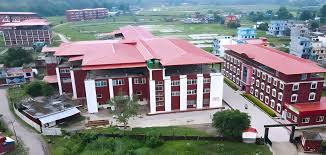
When families explore MBBS in Nepal, they often begin by comparing college names, fee structures, and university affiliations. While those factors are essential, one element quietly shapes a student’s entire medical journey over the next five and a half years – the city.
The city determines daily routine, hospital exposure intensity, lifestyle discipline, connectivity to India, living comfort, and even emotional adjustment during academically demanding years. For Indian students planning MBBS in Nepal for Indian students, understanding how cities differ is not optional – it is strategic.
Nepal’s major medical education hubs are Pokhara, Kathmandu, Bharatpur, and Biratnagar. Each offers a distinct academic ecosystem. Choosing wisely requires evaluating environment, exposure, infrastructure, and long-term suitability – not just popularity.
Let’s break this down analytically.
Pokhara – Structured Academic Focus in a Stable Environment
Pokhara is widely known for its natural beauty, but from an academic perspective, its real strength lies in stability. Institutions such as Manipal College of Medical Sciences operate within an environment that supports structured learning and disciplined routine.
Pokhara is neither too small nor overwhelming. It offers a balanced urban setting where students can focus on academics without the distractions of a capital city. The medical colleges here are supported by established teaching hospitals that ensure consistent clinical exposure.
One important advantage of Pokhara is psychological rhythm. The relatively calm environment helps students settle quickly, especially during the foundational years when subjects like Anatomy, Physiology, and Biochemistry demand concentration and adjustment to medical education standards.
From a clinical perspective, patient inflow is steady and diverse enough to provide meaningful exposure. Students benefit from structured ward postings and supervised training without navigating the complexity of metropolitan hospital systems.
Pokhara often suits students who:
- Prefer disciplined environments
- Adjust better in moderately paced cities
- Value stability over fast-paced urban life
For families comparing Study MBBS in Nepal options, Pokhara represents a strong balance between academic seriousness and manageable lifestyle conditions.
Kathmandu – Capital Advantage and High Clinical Diversity
Kathmandu, Nepal’s capital, presents a very different academic environment. It is home to several prominent institutions, including Kathmandu Medical College, Nepal Medical College, and KIST Medical College.
As a metropolitan center, Kathmandu offers dense hospital networks, large tertiary care institutions, and exposure to a wide spectrum of medical cases. This diversity can be extremely beneficial during clinical years, as students encounter complex and varied patient presentations.
However, the capital city environment also introduces faster pace, higher competition, and greater distractions. Students studying here must manage urban lifestyle factors while maintaining academic discipline.
Kathmandu’s advantages include:
- Broad patient demographics
- Exposure to multi-specialty hospitals
- Greater networking opportunities
- Stronger air connectivity for Indian students
For self-motivated and adaptable students, Kathmandu can offer unmatched clinical diversity. For others who prefer quieter surroundings, the capital may feel intense.
In the context of MBBS in Nepal for Indian students, Kathmandu works well for those seeking metropolitan exposure and are comfortable navigating dynamic environments.
Bharatpur – Clinical Strength in a Balanced Setting
Bharatpur, located in the Chitwan district, has steadily evolved into a serious medical education hub. Colleges such as Chitwan Medical College and College of Medical Sciences have contributed to the region’s academic reputation.
What makes Bharatpur analytically interesting is its balance. It does not carry the density of Kathmandu nor the calm identity of Pokhara. Instead, it offers a focused environment centered strongly around hospital activity.
The teaching hospitals in Bharatpur are known for consistent patient inflow and hands-on exposure. Students often gain meaningful ward experience and direct patient interaction, which becomes valuable during internship and future licensing preparation.
Bharatpur’s manageable city size means:
- Limited lifestyle distractions
- Practical daily routine
- Stable academic rhythm
- Strong clinical immersion
For families evaluating Nepal MBBS fees for Indian students, Bharatpur-based colleges sometimes fall within competitive fee brackets while still offering structured academic and clinical systems.
Students who prefer a serious, hospital-focused environment without the pressure of a capital city often find Bharatpur to be a logical choice.
Biratnagar – Accessibility and Cultural Familiarity
Biratnagar holds a unique advantage for Indian students – geographical proximity to India. Institutions such as Nobel Medical College and Birat Medical College operate in this region.
For many families, proximity matters not just for travel convenience, but for psychological comfort. Being closer to the Indian border reduces logistical complexity during visits and emergencies.
Academically, Biratnagar offers growing medical infrastructure supported by active teaching hospitals. While it may not match the capital’s clinical diversity, it provides consistent exposure within a culturally familiar environment.
Students studying here often benefit from:
- Cross-border accessibility
- Familiar social surroundings
- Developing tertiary hospital systems
- Balanced urban growth
For parents prioritizing comfort and connectivity, Biratnagar can be a practical and reassuring option.
What Actually Changes When You Change the City?
It is important to clarify what city selection does and does not influence.
Changing the city impacts:
- Lifestyle pace
- Clinical intensity
- Student independence level
- Daily academic rhythm
- Travel accessibility
However, it does not change:
- University-controlled curriculum
- MEC-regulated admission system
- Degree recognition framework
- NEET eligibility requirements for Indian students
All recognised medical colleges operate within Nepal’s regulated framework. City selection influences environment and exposure – not legitimacy.
Making a Strategic Decision
Instead of asking “Which city is best for MBBS in Nepal?”, families should evaluate:
- Does the student thrive in structured or metropolitan environments?
- Is strong clinical diversity a priority?
- How important is proximity to India?
- What level of independence is the student prepared for?
- How does the city align with budget expectations?
A strong decision matches environment with student personality and long-term academic goals.
Role of Structured Guidance
Comparing cities analytically requires understanding more than geography. It requires knowledge of university affiliation, clinical infrastructure, and admission procedures.
Through MyMBBSinNepal.com, WRC Nepal helps families evaluate options with clarity – aligning city choice with student profile, NEET qualification, academic expectations, and financial planning.
The goal is not to declare one city superior, but to ensure the chosen city supports the student consistently throughout the MBBS journey.
Nepal offers multiple strong destinations for MBBS, each with distinct academic rhythm and exposure profile. Pokhara offers stability, Kathmandu provides diversity and intensity, Bharatpur delivers focused clinical grounding, and Biratnagar brings accessibility and familiarity.
When chosen strategically, the city becomes an academic advantage rather than a logistical variable.
In medical education, environment shapes discipline – and discipline shapes doctors.